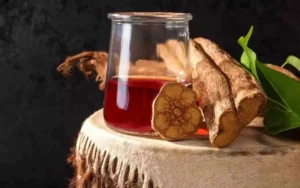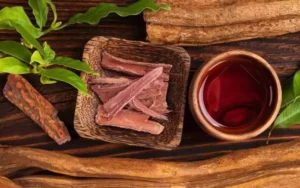
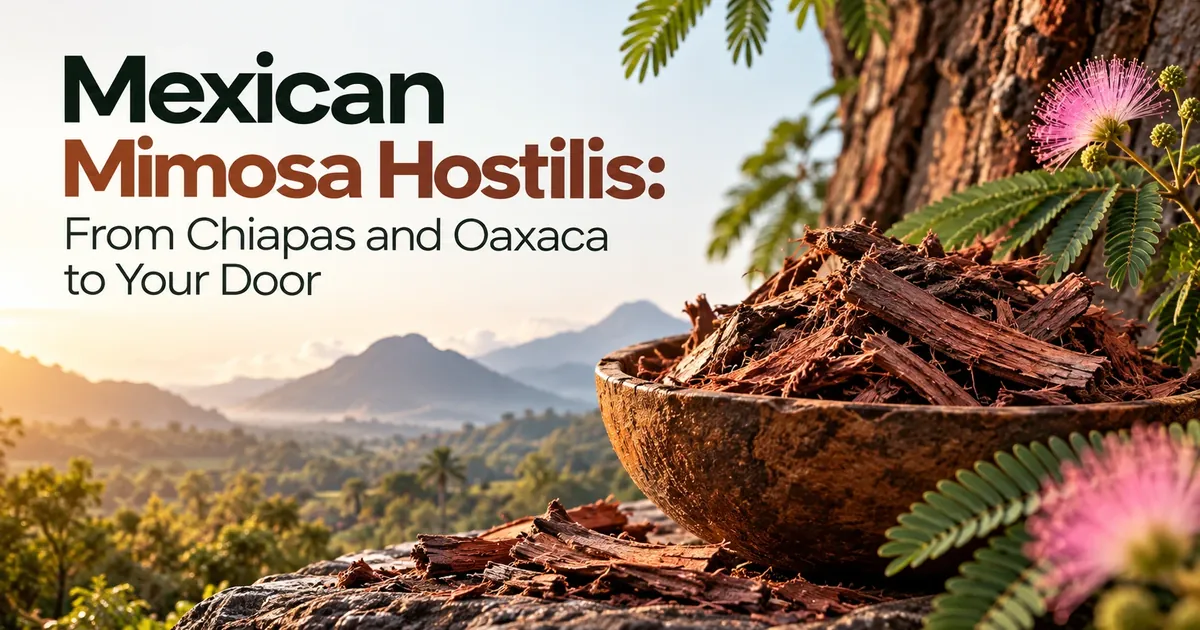
The Mexican Mimosa Hostilis available from MHRBUSA comes from Chiapas and Oaxaca, two regions in southern Mexico where this species grows naturally and is traditionally known as tepezcohuite or tepescohuite.
After harvesting, the inner root bark undergoes a process of cleaning, air-drying, hand sorting, and storage. It is then transported to the United States, where it remains available for domestic distribution.
Understanding this journey helps buyers know what they are purchasing, where the product comes from, and why traceability is an important consideration when choosing root bark. At MHRBUSA.com, you can find whole pieces of Mexican root bark for external, botanical, craft, educational, and natural dyeing applications.
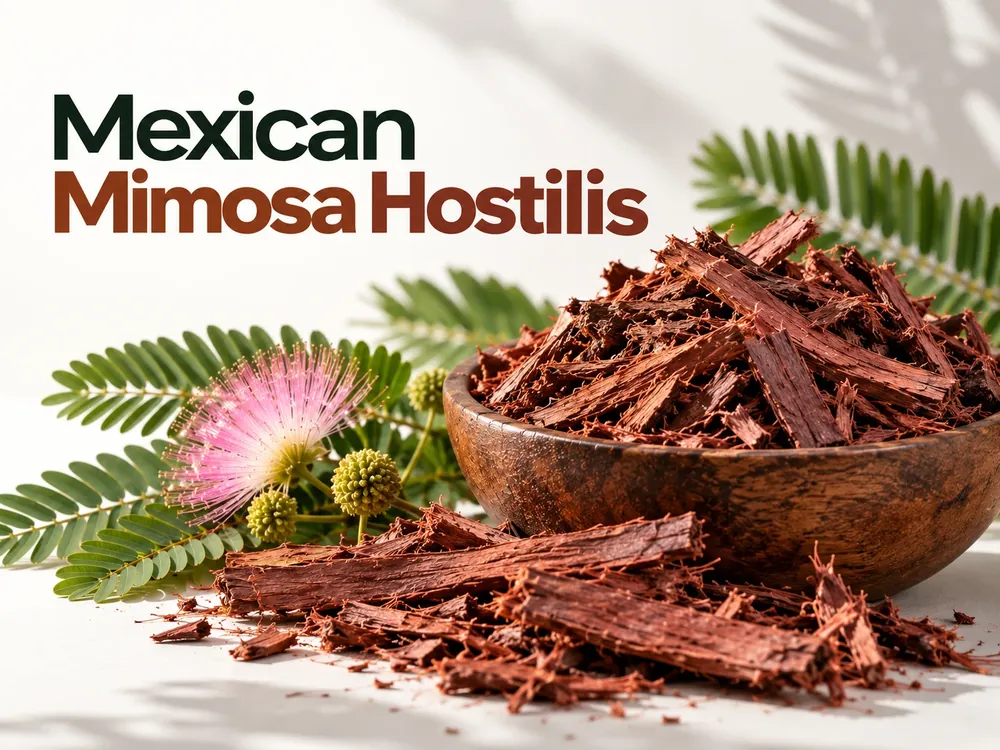
Where Does Our Mexican Mimosa Hostilis Come From?
Our Mexican Mimosa Hostilis comes from Chiapas and Oaxaca. These regions are located in southern Mexico and form part of the natural range of the botanical species Mimosa tenuiflora.
In Mexico, this plant is known by several traditional names:
- Tepezcohuite.
- Tepescohuite.
- Mimosa hostilis.
- Mimosa tenuiflora.
- Cabrero.
Although the names may vary depending on the region and context, Mimosa hostilis and Mimosa tenuiflora refer to the same species.
Origin is important because it distinguishes Mexican root bark from products grown or harvested in other regions. It also provides useful traceability information and helps buyers verify that they are purchasing the variety they actually need.
The Mexican Mimosa Hostilis Root Bark available from MHRBUSA is sold as whole inner root bark. This means that it retains a form close to the original material and has not been previously processed into powder.
From Chiapas and Oaxaca to the United States: The Journey of Our Mexican MHRB
The bark’s journey begins in Mexico and continues through several stages before reaching the buyer. Each step affects the condition, cleanliness, and final presentation of the product.
| Stage | What Happens | Why It Matters |
|---|---|---|
| Origin | Mimosa tenuiflora grows in Chiapas and Oaxaca | Identifies its regional origin |
| Selection | Pieces of inner root bark are selected | Helps separate the appropriate material |
| Cleaning | Soil and external materials are removed | Prepares the bark for drying |
| Drying | The pieces are air-dried | Reduces moisture before storage |
| Sorting | The bark is manually inspected and organized | Helps identify pieces in suitable condition |
| Storage | The material is stored after drying | Helps protect it from moisture and contamination |
| Transport to the USA | The bark arrives in domestic inventory | Facilitates distribution within the country |
| Order preparation | The requested quantity is selected | Allows the product to be packed according to the order |
| Delivery | The order is shipped to the customer | Completes the journey from Mexico to their door |
Selecting the Inner Root Bark
The part sold is the inner root bark. This distinction is important because root bark should not be confused with trunk bark, wood, stems, or other parts of the plant.
The selection process aims to preserve whole pieces that allow buyers to observe physical characteristics such as:
- Curvature.
- Texture.
- Irregular shape.
- Layers of bark.
- Natural coloration.
- Differences in size.
Because this is a natural plant material, no two pieces are exactly alike.
Cleaning and Preparation
After selection, the bark must be cleaned to remove soil and other external materials associated with harvesting.
Cleaning is part of the preparation process before drying. Its purpose is not to alter the bark’s structure but to prepare it for the stages that follow.
Natural Air-Drying
Mexican root bark is air-dried before storage. This process helps reduce the moisture present in the material after harvesting and cleaning.
Proper drying is important because excess moisture can affect storage conditions. Even after receiving the product, buyers should keep it in a cool, dry, and protected location.
Hand Sorting
Once dry, the bark is sorted by hand. During this stage, the pieces are inspected and organized according to their general condition.
Hand sorting helps preserve the whole-piece presentation and identify material that does not match the expected characteristics.
Storage After Drying
The bark should be stored in a way that protects it from:
- Moisture.
- Direct sunlight.
- Dirt.
- Contaminants.
- External odors.
- Unnecessary environmental changes.
Protection during storage is important both before and after the sale.
Transportation and Distribution in the United States
After being prepared in Mexico, the bark is transported to the United States to become part of MHRBUSA’s domestic inventory.
Keeping the product within the country allows domestic orders to be prepared without requiring each buyer to purchase directly from an international supplier. It also makes tracking easier and reduces reliance on individual overseas shipments.
Order Preparation and Shipping
When a customer places an order, the selected quantity is prepared and shipped from within the United States.
In this way, the bark’s journey connects its Mexican origin with more accessible distribution for buyers located throughout the country.
What Is Mexican Mimosa Hostilis Inner Root Bark?
The inner bark is a section of the root located beneath the outer layers. It is one of the most commercially sought-after parts of the plant because of its natural pigment and tannin content.
Mexican Mimosa Hostilis – Whole Root Inner Bark (MHRBUSA™) is offered as whole pieces with minimal processing.
This allows the bark to retain visible characteristics that would be more difficult to examine after shredding or powdering.
Root Bark Is Not the Same as Trunk Bark
Root bark and trunk bark should not be confused. Although both come from the same tree, they are different parts of the plant.
A clear commercial description should specify whether the product contains:
- Inner root bark.
- Outer bark.
- Trunk bark.
- Wood.
- Fibers.
- A mixture of materials.
In this case, the Mexican product is identified as whole inner root bark.
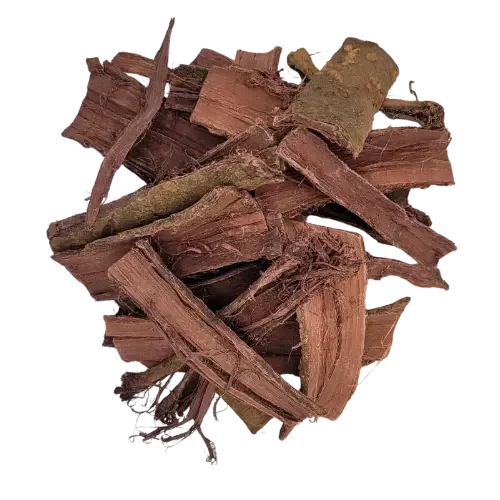
What Does “Whole Root Inner Bark” Mean?
The phrase whole root inner bark means that the product is sold as whole pieces of the root’s inner bark rather than being pre-shredded or powdered.
“Whole” does not mean that every piece will have exactly the same length. The bark is cut into sizes that make cleaning, storage, packaging, and transportation more practical.
How We Prepare Mexican Root Bark Before Sale
The process is designed to preserve the bark as whole pieces and limit unnecessary transformations before it is offered to the buyer.
Minimal Processing
The whole-piece presentation retains the material’s visible structure. It has not been converted into powder or reduced to a fine mixture before sale.
This minimal processing may be suitable for customers who:
- Prefer to examine the bark.
- Want to control its preparation themselves.
- Need different sizes for specific projects.
- Want a material close to its original form.
- Have suitable tools for modifying it.
Hand-Selected Pieces
The pieces are inspected and sorted after drying. Hand selection helps separate unwanted materials and maintain a presentation consistent with the product description.
Natural variations will still remain visible because this is not a uniformly manufactured material.
Storage Before Order Preparation
After sorting, the bark is stored until it is prepared for sale. During this period, it must remain protected from moisture and external contaminants.
The same principle applies after the buyer receives the order.
How We Identify the Quality of Each Batch
The quality of botanical bark should not be determined by a single characteristic. Color, aroma, and size can vary naturally and do not provide an absolute guarantee on their own.
Several factors should be considered when evaluating each batch.
Declared Origin
The product’s origin should be clearly stated. In the case of our Mexican Mimosa Hostilis, the product is identified as coming from Chiapas and Oaxaca.
Plant Part
The description should state that the product is inner root bark. This helps distinguish it from material obtained from the trunk or other parts of the plant.
Condition of the Pieces
The pieces may vary in:
- Length.
- Width.
- Curvature.
- Thickness.
- Texture.
- Color.
These differences are normal in a natural plant material.
Cleanliness
The bark should be prepared to reduce the presence of soil and external materials associated with harvesting.
Moisture
Drying is an essential stage before storage. Material with excessive moisture may deteriorate more easily.
No Undeclared Mixtures
Buyers should know whether they are receiving inner bark, fibers, wood, or a combination of materials. Product information should be precise and avoid ambiguous terms.
Packaging
The packaging should protect the bark during storage and transportation. After opening it, the buyer is responsible for resealing the product properly.
What Is Mexican Mimosa Hostilis Used For?
Mexican root bark can be used for various external, botanical, educational, and craft applications.
Natural Dyeing
Its natural pigment and tannin content makes it of interest for natural coloring projects.
Results may vary depending on:
- Amount of bark.
- Type of fiber.
- Material preparation.
- Water quality.
- Contact time.
- Batch characteristics.
- Dyeing method.
Because this is a natural product, not every project will produce exactly the same shade.
Textile Projects
The bark may be used in craft projects involving fabrics and natural fibers. Before working on an entire piece, it is advisable to perform a test on a small sample.
Leather and Wood Crafts
Plant pigments may also be of interest for decorative projects involving other materials. The final result will depend on the surface and the method used.
Botanical Research
Whole pieces allow physical characteristics to be examined that are not preserved in the same way after the material has been powdered. This may be useful for botanical studies and collections.
Educational Displays
The bark may be used as a specimen in herbariums, craft demonstrations, and educational activities related to plant species and natural colorants.
Professional Production of External-Use Products
It may also serve as a raw material for professionals developing properly formulated external-use products. Raw botanical material should not be applied directly to the skin without an appropriate formulation.
Advantages of Buying Whole Mexican Root Bark
The whole-piece form offers several characteristics that may be convenient depending on the project.
Allows the Physical Structure to Be Examined
Buyers can examine the shape, texture, curvature, and visible layers before processing the material.
Retains a Less-Processed Form
The pieces have not been converted into powder beforehand, allowing them to remain closer to the material’s original form.
Makes It Easier to Control the Size
Buyers can cut or reduce the pieces according to the needs of their project, provided that they have the appropriate tools.
Allows the Buyer to Determine the Level of Processing
A whole piece may be kept in its original form or processed later. This decision remains under the buyer’s control.
Makes Visual Evaluation Easier
Certain physical characteristics are more difficult to assess once the bark has been powdered. Whole pieces allow for more direct visual inspection.
Considerations Before Choosing It
Whole bark also requires more preparation. It may be tough and difficult to reduce using household tools.
Before purchasing it, consider:
- The size required for the project.
- Whether you have suitable tools.
- The quantity you plan to use.
- Where the pieces will be stored.
- Whether you actually need to retain the whole-piece form.
How to Store Mexican Mimosa Hostilis
Proper storage helps preserve the product after it is received.
The bark should be kept:
- In a cool place.
- In a dry environment.
- Protected from direct sunlight.
- In tightly sealed packaging or a closed container.
- Away from food and medication.
- Separate from substances with strong odors.
- Out of reach of children and animals.
Avoid Moisture
Moisture is one of the main factors that can affect stored plant material. Do not keep the bark in areas exposed to steam, water, or condensation.
Keep the Packaging Sealed
After removing the amount needed, reseal the container or packaging. This reduces exposure to the surrounding environment and potential contaminants.
Inspect the Material Before Use
If the bark has been stored for an extended period, inspect its condition before using it. Avoid material with visible contamination, excessive moisture, or unusual changes.
Where to Buy Mexican Mimosa Hostilis in the United States
You can purchase Mexican Mimosa Hostilis Root Bark from MHRBUSA, available as whole inner root bark sourced from Chiapas and Oaxaca.
Purchasing from a specialized store allows you to review important information before completing your order:
- Botanical name.
- Country and region of origin.
- Part of the plant.
- Product form.
- Quantity.
- Availability.
- Permitted applications.
- General product conditions.
Having inventory within the United States also allows orders to be distributed domestically without requiring each customer to manage a direct international purchase.
Customers who want to review other product forms can browse the Mimosa Hostilis Root Bark catalog. However, the Mexican product is identified separately so that its origin remains easy to recognize.
From Its Origin to Your Door: Why Traceability Matters
Traceability makes it possible to understand a product’s general journey from its region of origin to delivery.
In the case of our Mexican Mimosa Hostilis, this journey begins in Chiapas and Oaxaca, continues through the selection of the inner root bark, cleaning, air-drying, and hand sorting, and concludes with transportation and distribution from within the United States.
Understanding this process helps buyers:
- Confirm the declared origin.
- Identify the part of the plant.
- Understand the level of processing.
- Distinguish the Mexican product.
- Choose the appropriate form.
- Make a more informed purchase.
Traceability does not eliminate natural variation. Each batch may differ in color, shape, texture, and size. These differences are consistent with the nature of the product and should be evaluated alongside its origin, cleanliness, processing, and storage.
If you are looking for whole inner root bark sourced from Mexico, you can view the Mexican Mimosa Hostilis available from MHRBUSA and select the quantity that best suits your project.
Frequently Asked Questions
Where Does MHRBUSA’s Mexican Mimosa Hostilis Come From?
It comes from Chiapas and Oaxaca in southern Mexico. These regions form part of the natural range of Mimosa tenuiflora.
Is Mexican Mimosa Hostilis the Same as Tepezcohuite?
Yes. Tepezcohuite and tepescohuite are traditional names used in Mexico for Mimosa tenuiflora, which is also commercially known as Mimosa hostilis.
What Does Whole Inner Root Bark Mean?
It means that the product consists of pieces from the inner section of the root bark and has not been previously processed into powder.
Is Mexican Root Bark Sold as a Powder?
The Mexican product currently available from MHRBUSA is whole inner root bark. Review the product page to confirm the options available when placing your order.
How Is Mexican Root Bark Dried?
The pieces are air-dried before being sorted and stored. Drying helps reduce moisture in the material.
Why Can the Pieces Vary in Color and Size?
Because this is a natural plant material. Shape, size, texture, thickness, and color may vary between pieces and batches.
What Is Mexican Mimosa Hostilis Used For?
It is primarily used for natural dyeing, craft projects, botanical research, educational displays, and the professional production of properly formulated external-use products.
How Should It Be Stored?
It should be stored in a cool, dry place, protected from direct light, and kept in tightly sealed packaging or a closed container.
Where Can I Buy Mexican Mimosa Hostilis in the United States?
You can purchase it from MHRBUSA.com, available as whole inner root bark sourced from Mexico and distributed from within the United States.